Reading for Meaning
IN THIS LESSON
English Language Essentials
When answering evaluation questions, it’s important to remember that "evaluate" means to assess the effectiveness of something, not just to say whether you like or dislike it. You will need to focus on how well the writer achieves their purpose, rather than just describing what they do.

Approaching Evaluation
A helpful way to approach an evaluation question is to focus on how well the writer has achieved their goal. For example, if asked how well a writer creates tension, you shouldn't just look at individual techniques or words. Instead, consider how effectively the writer builds tension throughout the text.
Key Ideas for Evaluation:
Evaluate (verb): To assess the effectiveness of something and form an idea about its value.
Synonyms: Judge, analyse, form an opinion of, assess.
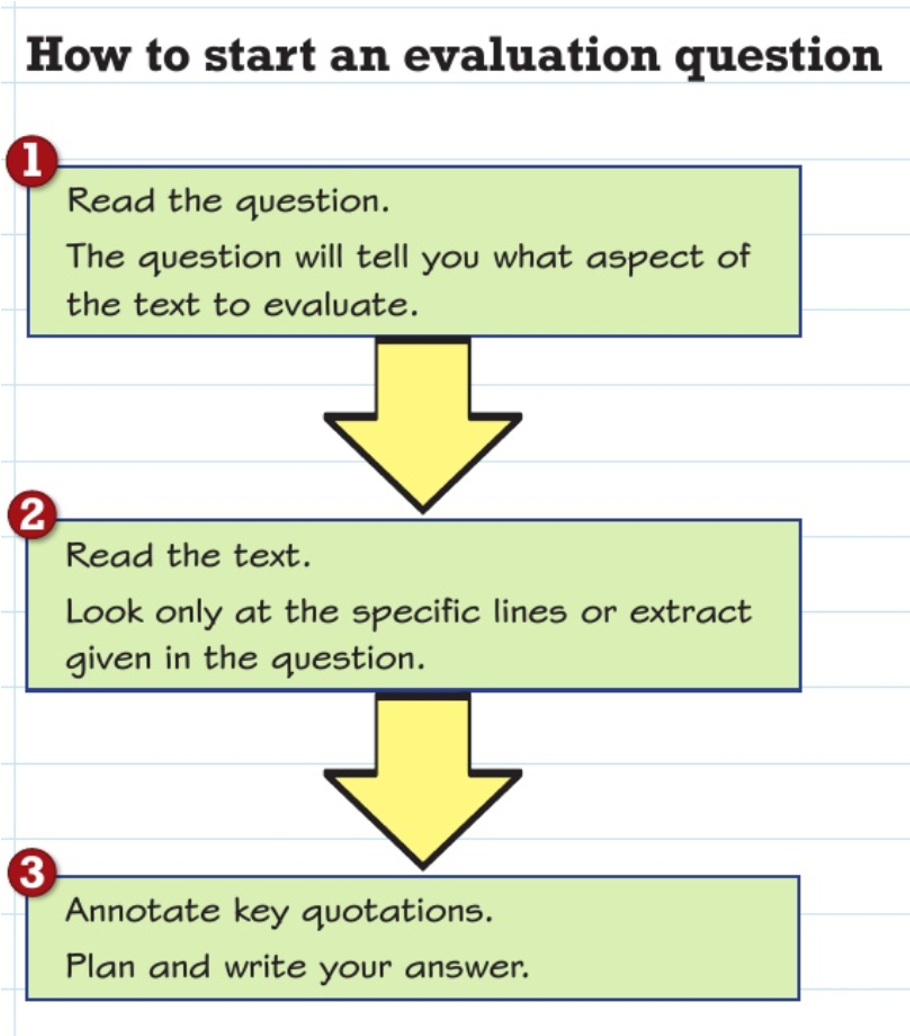
How to Approach an Evaluation Question:
Read the question carefully: The question will guide you on which aspect of the text to evaluate (e.g., tone, tension, effectiveness of persuasion).
Read the extract: Focus only on the specific lines or passage mentioned in the question.
Annotate key quotations: Highlight parts of the text that help you answer the question.
Plan and write your answer: Organise your thoughts, present your evaluation clearly, and support it with evidence.
Reading the Text
When reading the text for evaluation, consider the following:
What happens or is described: What events or situations are being portrayed?
What the writer thinks or believes: Does the writer present an opinion or argument?
Tone: What is the overall mood or feeling of the text?
Purpose/Intention: Why has the writer chosen to write this text? What do they want the reader to think or do?
Think about how the writer uses these elements to create effects on the reader. Consider whether the writer achieves their purpose effectively.

Further Details
Using Inference
When evaluating, you need to use inference. This means reading between the lines to understand the writer’s intentions. You should be able to explain how the writer’s choices create the intended effects on the reader. This helps you assess how successful the writer has been in achieving their goal.
Judgement and Explanation
After making your inference, make a judgement: how well has the writer achieved their aim? To do this, explain your ideas in detail and support them with evidence from the text.

English Language Activity
Activity: Evaluate the Effectiveness of Descriptive Writing
Read the following text extract: “The sun set slowly behind the hills, casting long shadows over the sleepy village. As the sky darkened, the first stars began to twinkle, filling the air with a sense of calm and serenity.”
Answer the following:
What effect does the writer create with the description of the sunset and the village?
How does the use of sensory details (e.g., sight, atmosphere) help to build the tone?
How successful is the writer in creating a peaceful, calm atmosphere?
Write your evaluation, supporting your points with quotes from the extract.


Bonus Activity
Evaluate the Success of the Writer's Purpose in this Passage
In the text provided above, evaluate how effectively the writer has created a calm and peaceful atmosphere. Consider the following:
Do the descriptive details help to paint a clear picture of the scene?
Does the writer’s choice of words influence the tone or mood?
How well does the writer achieve their purpose of evoking a sense of serenity?
Knowledge Check/Review
What does "evaluate" mean in the context of a text?
Why is it important to focus on "how well" something is achieved?
What should you do first when you are asked to evaluate a text?
What should you avoid when writing an evaluation?
True or False: When you evaluate a text, you need to focus on individual words and techniques in great detail.

Answers to the Activity and Knowledge Check/Review
Activity: Evaluation of Descriptive Writing
Effect of the description: The writer creates a peaceful and calming effect by describing the sunset and the quiet village. This evokes a sense of tranquillity and sets a relaxed mood.
Use of sensory details: The mention of "sunset," "long shadows," and "twinkling stars" engages the reader’s senses of sight and atmosphere, reinforcing the calm tone.
Success of the writer: The writer is highly successful in creating a serene atmosphere. The choice of words like "sleepy," "calm," and "serenity" enhances the peaceful tone.
Knowledge Check/Review Answers
To assess how well the writer has achieved their purpose or effect.
It helps you focus on the overall success of the text, which is what the question is asking for.
Read the question to identify which aspect of the text to focus on.
Avoid just stating whether you like or dislike the text; focus on its effectiveness.
False – focus on the overall effect rather than just individual techniques.